
World leaders unite to support declaration on health issues
Sep 26, 2025
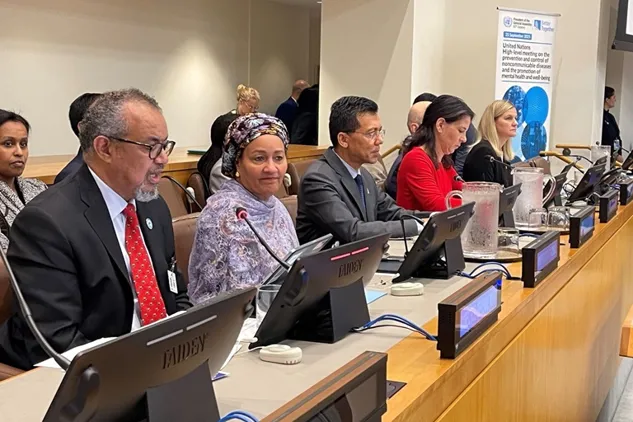
World leaders have expressed strong support for the text of the first global political declaration by the United Nations addressing noncommunicable diseases (NCDs) and mental health in an integrated approach. This declaration was developed through a five-month intergovernmental process and is scheduled for final approval at the 80th session of the General Assembly in October 2025.
Heads of state and government, along with health ministers, convened yesterday for the fourth United Nations General Assembly High-level Meeting on noncommunicable diseases and mental health.
NCDs, such as cardiovascular diseases, lung diseases, cancers, and diabetes, are the leading causes of death globally, resulting in at least 43 million fatalities in 2021, including 18 million individuals under the age of 70. Four out of five (82%) of these premature deaths occur in low- and middle-income countries. Additionally, mental health conditions impact over a billion individuals worldwide.
The rise of NCDs is evident in every country and community, posing urgent challenges for public health, productivity, and sustainable economic growth.
The political declaration being considered is titled "Equity and Integration: Transforming Lives and Livelihoods through Leadership and Action on Noncommunicable Diseases and the Promotion of Mental Health and Well-being."
The declaration outlines global targets to be reached by 2030, including a reduction of 150 million tobacco users; ensuring that 150 million more people have controlled hypertension; and providing access to mental health care for an additional 150 million individuals.
It incorporates lessons learned from the COVID-19 pandemic and addresses new global challenges by expanding the scope of noncommunicable diseases (NCDs) to encompass areas such as oral health, lung health, childhood cancers, liver diseases, kidney diseases, and rare diseases. It also emphasizes the significance of environmental determinants, including air pollution, clean cooking methods, lead exposure, and hazardous chemicals. Furthermore, it recognizes the escalating risks associated with digital harm, including issues related to social media exposure, excessive screen time, harmful content, and the threats of misinformation and disinformation.
The declaration stresses a more robust regulatory framework for e-cigarettes, new tobacco products, the marketing of unhealthy food to children, front-of-pack labeling, and the elimination of trans fats. Its commitments are designed to address the experiences and needs of individuals living with noncommunicable diseases (NCDs) and mental health conditions, while also considering climate-vulnerable populations, Small Island Developing States (SIDS), and those situated in humanitarian contexts.
#public health
#global health policy



© 2025 Health Tribe.