
Updated WHO Dashboard Reveals Insights on Antimicrobial Resistance
Sep 25, 2025
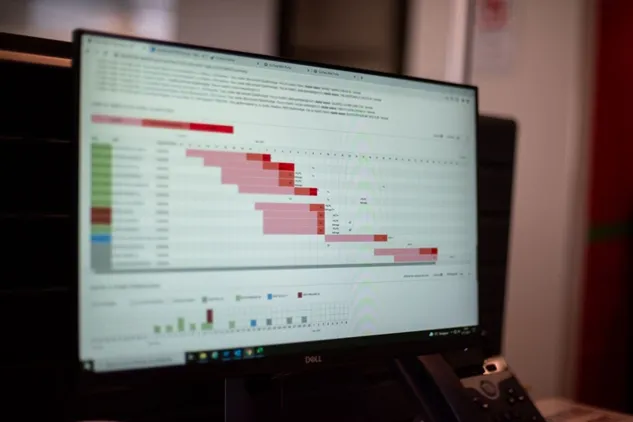
Today, the World Health Organization (WHO) launched an enhanced version of its Global Antimicrobial Resistance and Use Surveillance System (GLASS) dashboard, advancing global efforts to improve the monitoring of antimicrobial resistance (AMR) and use (AMU) worldwide.
The dashboard features AMR and AMU data from the years 2016 to 2023, as reported by 141 countries, territories, and areas (CTAs) involved in the WHO global surveillance initiative.
It presents data at global, regional, and national levels, including individual CTA profiles, and expands and complements the insights provided in GLASS reports. While the reports highlight key findings and offer actionable recommendations, the dashboard provides direct access to the underlying data, supporting transparent dissemination.
The GLASS-AMR dashboard offers a detailed overview of crude AMR data, which is utilized to create modeled estimates of surveillance coverage, antibiotic resistance, and trends on a national, regional, or global scale. These insights will be highlighted in the upcoming Global Antibiotic Resistance Surveillance Report, 2025.
The dashboard tracks advancements in the implementation of national AMR systems and the coverage of surveillance from 2016 to 2023, encompassing:
The GLASS-AMU dashboard presents national data on the use of systemic antimicrobials – including antibiotics, antifungals, antivirals, anti-tuberculosis medications, and antimalarials – covering the period from 2016 to 2023.
For each year, the dashboard highlights key data characteristics to support interpretation. As detailed in the latest GLASS-AMU report, antimicrobial use (AMU) is measured in Defined Daily Doses (DDDs) and presented both as density of use (DDDs per 1,000 inhabitants per day) and as usage patterns. The main focus remains on antibiotic use, described in terms of overall use, by WHO AWaRe classification, antibiotic subgroups, route of administration, and the most commonly used antibiotics. For the first time, users can explore subgroup-level data for other antimicrobial classes.
The dashboard is organized into two main sections:
The Global AMU section presents annual data at the global level, with breakdowns by WHO region and income level. Indicators are shown as distributions across countries (with medians and interquartile ranges) and by individual countries. Users can also view time trends for selected countries and download datasets.
The country, territory, or area profiles section allows users to view a CTA profile, which includes tables and time series data from 2016 to 2023. A downloadable PDF version of each profile is also available, summarizing key indicators.
As of December 2023, 98 CTAs had enrolled in GLASS-AMU. Among these, 68 provided data for 2023, and an additional 10 had reported at least once during the years 2016–2022. The current dashboard features validated data from 73 CTAs. In 2023, 57% of total antibiotic use worldwide was attributed to ‘Access’ antibiotics, and only one in three CTAs (22 out of 65; 34%) achieved the WHO target of having at least 70% of national antibiotic use consist of ‘Access’ antibiotics.
#public health
#antimicrobial resistance



© 2025 Health Tribe.