
How can a silver bowl effectively clean ink and absorb toxins?
Sep 24, 2025
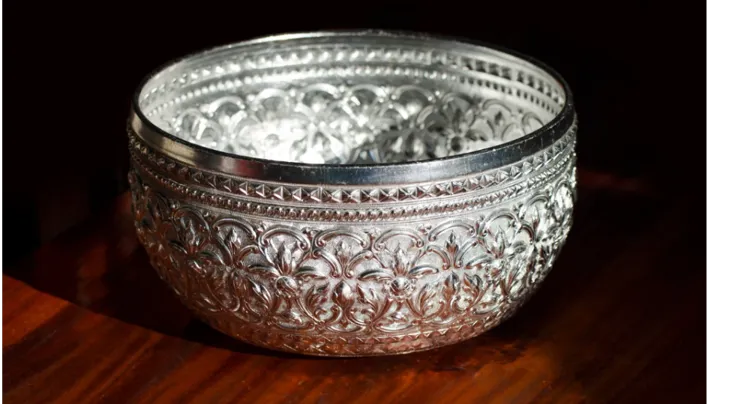
Title: How can a silver bowl effectively clean ink and absorb toxins?
Introduction: Misleading propaganda suggests silver utensils absorb drugs; this article clarifies their limitations and explores silver ions' antibacterial use.
Keywords: ['Food safety', 'Health']
Author: Silver Spear Little White Dragon, Science Popularization Creator
Review | Sun Mingxuan, Professor at Shanghai University of Engineering Science, Member of the China Association for Science and Technology Writers.
"The rumor suggests that a silver bowl can clean ink, symbolizing its ability to absorb toxins."
Many tour guides at scenic spots emphasize that silver can detoxify while promoting silver bowls and similar utensils. They often conduct demonstrations, such as filling a silver bowl with water and then adding ink to it. Shortly thereafter, the water appears completely clean. They claim that the silver ions in the bowl can entirely purify the ink from the water, removing the toxins from the ink.
Rumor Analysis
This statement has no basis.
Silver is an inert metal, and normal water is unlikely to react with a silver bowl. The discoloration of ink occurs because the acidic methylene blue in the ink can easily be oxidized and fade. By adding some oxidizing agents, weak alkalines, or complexing agents to the water, the ink can be made to fade.
This reaction is unrelated to the silver bowl, and there is no situation where "toxins" are absorbed by the silver bowl.
Some tourist attractions use all kinds of tricks to sell things at high prices. What they didn't expect was that tricks from decades ago would make a comeback and deceive a new batch of unsuspecting visitors.
Silver ions in the silver bowl.
Silver ions do indeed have antibacterial properties, as once silver transitions into ionic form (Ag⁺), it exhibits extremely high reactivity and a strong affinity for the thiol groups (-SH) found in the cells of bacteria and other microorganisms. This reaction permanently inactivates the enzymes within the microorganisms, impairing their energy metabolism and leading to their eventual death. This effect is effective against various bacteria, certain viruses, fungi, algae, and other microorganisms.
Silver, however, is a very inert metal made up of silver atoms. It only loses electrons and transforms into ions when it reacts with certain acids or other strong oxidizers. In other words, pouring pure water into a pure silver bowl will not result in the presence of "silver ions," unless a strong oxidizer is introduced into the bowl.
Currently, silver ions are primarily used for antibacterial purposes in textiles, incorporated in forms such as nano silver, silver zeolite, zirconium (sodium) silver phosphate, silver sulfide, and silver chloride. These powders are added during the spinning phase to create silver ion acrylic fibers, which are then made into fabric layers placed between several layers of other textiles. When sweat or moisture makes the environment humid, silver ions will continuously and slowly react, providing antibacterial effects.
Purified Ink
Is it just about sucking out the toxins from the ink?
First of all, colorless does not equal non-toxic. If a colored liquid is transformed into a clear solution through a series of operations, it only indicates that the colored components have undergone a chemical reaction; it does not necessarily mean that toxins are removed. In fact, it is possible that the colored components, after the chemical reaction, become clear while simultaneously generating colorless and odorless toxic substances. Therefore, equating the process of changing the color of the liquid directly with "removing toxins" is a misleading fallacy.
Secondly, there are no lethal toxins in the ink. After watching some live demonstration videos from various scenic spots, it turns out that all the "toxins" used in the silver bowl experiment are just pure blue ink. The main component of pure blue ink is acid methyl blue, which is very prone to oxidation and fading. Adding an oxidizing agent, a weak base, or a chelating agent (such as oxalic acid) to the water can make the pure blue ink become transparent.
Many people may be misled by the ancient practice of "testing for poison with a silver needle," a scene often depicted in movies and television dramas. The reason this practice was more credible in ancient times is that the primary means of poisoning was arsenic, which is composed of arsenic trioxide. This can react with silver metal, causing the silver needle to quickly tarnish and turn black. However, if we consider some modern poisons, such as pesticides or cyanide, silver needles would have no effect at all.
Silver utensils are acceptable.
Are these utensils for everyday meals?
The simple answer is yes, but it’s not really necessary.
To ensure safety and peace of mind, it is essential to confirm that the silverware is made of 925 silver or 999 silver, meaning the purity of the silver is above 92.5% or 99.9%, respectively.
Secondly, silver of this purity is soft and has excellent thermal conductivity, which makes it less suitable for everyday use. Just imagine using a silver bowl to serve soup; you could easily burn your hand while carrying it, and if you accidentally drop the silver bowl, it could get dented. It's much more practical to use a ceramic bowl that conducts heat more slowly or a sturdier stainless steel bowl.
If you find the silver bowl truly beautiful and really want to use it, there is still one issue to consider: the sulfur compounds in eggs, garlic, and cruciferous vegetables like broccoli can cause silverware to tarnish. Although the black silver sulfide is harmless to the body and isn't absorbed during digestion, a shiny silver bowl turning into a black bowl seems to stray further from the original intention of wanting something beautiful...
So if you want to use silverware for dining, there's no need to worry about health issues. However, you might need to invest extra time and effort in caring for it to enhance your visual experience.
"Mirror of Rumors"
Such rumors tend to feature characteristics of concept substitution and hasty generalization, particularly by wrapping them in some old stories and directly interpreting chemical changes as exaggerated claims about toxin absorption.
When faced with such rumors, it is essential to rely on scientific logic for judgment, especially being cautious of exaggerated claims with miraculous effects. One should always remain vigilant.
Planning and production
#health
#food safety


© 2025 Health Tribe.