
High Blood Pressure Threatens Over One Billion People
Sep 23, 2025
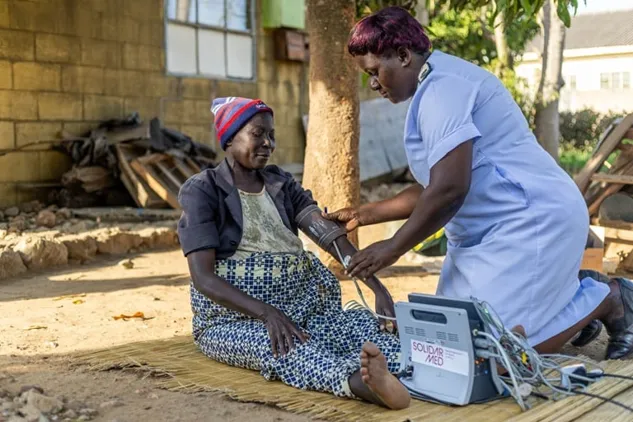
The World Health Organization (WHO) today released its second Global Hypertension Report, revealing that 1.4 billion people lived with hypertension in 2024, yet only slightly more than one in five have it under control, either through medication or by addressing modifiable health risks.
The new report, released at an event co-hosted by the WHO, Bloomberg Philanthropies, and Resolve to Save Lives during the 80th United Nations General Assembly, reveals that only 28% of low-income countries report that all WHO-recommended hypertension medicines are generally available in pharmacies or primary care facilities.
Hypertension is a leading cause of heart attack, stroke, chronic kidney disease, and dementia. It is both preventable and treatable – but without urgent action, millions of people will continue to die prematurely, and countries will face mounting economic losses. From 2011 to 2025, cardiovascular diseases – including hypertension – are projected to cost low- and middle-income countries approximately US$ 3.7 trillion, equivalent to around 2% of their combined GDP.
"Every hour, over 1000 lives are lost to strokes and heart attacks from high blood pressure, and most of these deaths are preventable," said Dr. Tedros Adhanom Ghebreyesus, WHO Director-General. "Countries have the tools to change this narrative. With political will, ongoing investment, and reforms to integrate hypertension control into health services, we can save millions and ensure universal health coverage for all."
"Uncontrolled high blood pressure claims more than 10 million lives every year, despite being preventable and treatable. Countries that integrate hypertension care into universal health coverage and primary care are making real progress, but too many low- and middle-income countries are still left behind," said Dr. Kelly Henning, who leads the Bloomberg Philanthropies Public Health Program. "Strong policies that raise awareness and expand access to treatment are critical to reducing cardiovascular disease and preventable deaths."
Analysis of data from 195 countries and territories reveals that 99 of them have national hypertension control rates below 20%. The majority of those affected reside in low- and middle-income countries, where health systems struggle with resource limitations.
The report emphasizes significant shortcomings in the areas of hypertension prevention, diagnosis, treatment, and long-term management. Major obstacles include ineffective health promotion policies regarding risk factors such as alcohol consumption, tobacco use, physical inactivity, salt intake, and trans fats. Additionally, there is a lack of access to validated blood pressure monitoring devices, absence of standardized treatment protocols and adequately trained primary care teams, unreliable supply chains for medications, high costs of treatments, inadequate financial protection for patients, and insufficient information systems to track trends effectively.
Blood pressure medication is one of the most cost-effective public health tools. Yet only 7 out of 25 (28%) of low-income countries report general availability of all WHO-recommended medicines, compared to 93% of high-income countries. The report explores the barriers and strategies for improving access to hypertension medication through better regulatory systems, pricing and reimbursement, procurement and supply chain management, and improved prescribing and dispensing of these medicines.
“Safe, effective, low-cost medicines to control blood pressure exist, but far too many people can’t get them,” said Dr. Tom Frieden, President & CEO of Resolve to Save Lives. “Closing that gap will save lives — and save billions of dollars every year.”
Despite barriers, progress is possible. Bangladesh, the Philippines, and the Republic of Korea have made significant strides by incorporating hypertension care into universal health coverage (UHC), investing in primary care, and involving communities.
WHO calls on all countries to incorporate hypertension control into Universal Health Coverage reforms. Implementing the measures recommended in the report could prevent millions of premature deaths and alleviate the significant social and economic burden caused by uncontrolled high blood pressure.
WHO defines clinical hypertension in adults as a systolic blood pressure of 140 mmHg or higher and/or a diastolic blood pressure of 90 mmHg or higher on two separate occasions. In contrast, high blood pressure can elevate the risk of heart and kidney disease even at levels below this benchmark. For instance, a systolic blood pressure below 130 mmHg—while not categorized as hypertension—can still increase health risks.
Dedicated to the well-being of all people and guided by science, the World Health Organization leads and champions global efforts to give everyone, everywhere an equal chance at a safe and healthy life. We are the UN agency for health that connects nations, partners, and people on the front lines in over 150 locations—leading the world’s response to health emergencies, preventing disease, addressing the root causes of health issues, and expanding access to medicines and health care. Our mission is to promote health, keep the world safe, and serve the vulnerable. For more information, visit www.who.int and follow WHO on Twitter, Facebook, Instagram, LinkedIn, TikTok, Pinterest, and YouTube.
Bloomberg Philanthropies invests in 700 cities and 150 countries worldwide to enhance the quality and longevity of life for the greatest number of individuals. The organization aims to create enduring improvements in five essential areas: the Arts, Education, Environment, Government Innovation, and Public Health. Bloomberg Philanthropies includes all of Michael R. Bloomberg’s charitable contributions, encompassing his foundation, corporate initiatives, personal philanthropy, as well as Bloomberg Associates, a philanthropic consultancy that provides guidance to cities globally. In 2024, Bloomberg Philanthropies allocated $3.7 billion. For further details, please visit bloomberg.org, subscribe to our newsletter, or connect with us on Instagram, LinkedIn, YouTube, Threads, Facebook, and X.
The global hypertension report is funded by Bloomberg Philanthropies.
Resolve to Save Lives is a global health organization that partners locally and globally to create and scale solutions to the world’s deadliest health threats. Since 2017, we’ve worked with governments and other partners in more than 60 countries to save millions of lives. To find out more, visit resolvetosavelives.org or LinkedIn.
#public health
#health policy


© 2025 Health Tribe.