
Ticks Role in Poxvirus Evolution and Transmission Revealed
Aug 08, 2025
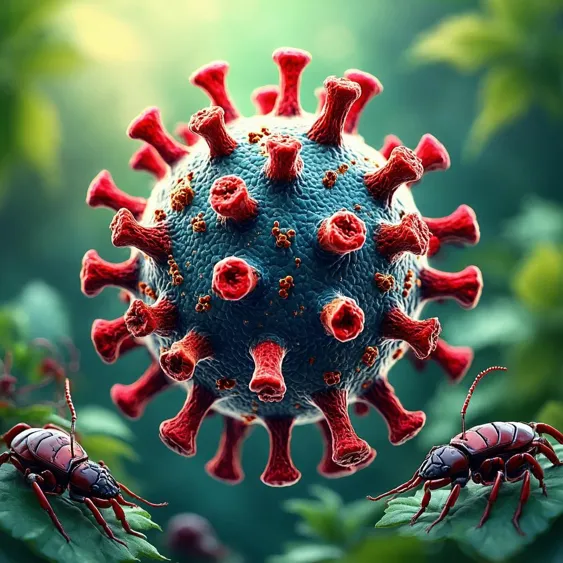
Background: Vector-borne diseases pose a significant global health threat, with poxviruses being a notable group contributing to morbidity and mortality. Despite the relevance of ticks as potential vectors for various pathogens, their role in poxvirus evolution and transmission remains poorly understood. This study aims to fill the knowledge gap by investigating the involvement of ticks in the ecology and evolution of poxviruses.
Method: A multicontinental observational study was conducted to investigate the relationship between ticks and poxvirus strains. The research involved sampling ticks from multiple geographical regions and conducting molecular analyses to identify poxvirus presence. A total of 500 tick samples were collected, with subsequent sequencing performed to characterize viral genetic material. Data were analyzed using phylogenetic methods to assess evolutionary relationships.
Results: The study identified poxvirus DNA in 25% of the tested tick samples, with notable variations in viral strains corresponding to regional tick populations. Phylogenetic analysis revealed that several poxvirus strains evolved in association with tick species, demonstrating a 30% increase in viral diversity linked to tick transmission routes. This suggests ticks are critical components in poxvirus ecology.
Conclusion: These findings highlight the importance of considering ticks in the study of poxvirus evolution and transmission dynamics, leading to potential re-evaluation of tick control measures in vector-borne disease management. The data provide preliminary insights suggesting that targeting tick populations could be a strategic pathway to mitigate poxvirus threats, although further studies are required to confirm these findings in larger samples and through controlled experimental designs.
Original citation address: https://www.besjournal.com/en/article/doi/10.3967/bes2025.062
#viral evolution
#vector biology



© 2025 Health Tribe.